Wednesday, May 6, 2015

Self-interest

This may surprise anyone  familiar with my socialist tendencies, but I like self-interest.
Enlightened self-interest, that is.
I wrote the other day that somewhere in the vicinity of 31 million Americans identify as being in recovery from addictions. If you look at the popular vote in the last presidential election, you'll see that the winning candidate received about 4 million more votes  than the loser. And as usual,  the total vote was  only a little more than a third of the total of eligible voters.
But that's beside the point, which is this.
There is an enormous amount of political power available right now, if recovering people are willing to grasp it.
Think of the possibilities. 
Every serious presidential candidate having to take a position on issues that involve recovering people.
Issues like availability of treatment, sentencing inequality, police brutality targeting addicts, discrimination and social prejudice. The list goes on and on.
In 2008 recovery meant rebuilding the country during a time of economic disaster.
In 2015, Recovery could be the banner under which recovering individuals join together in a spirit of enlightened self-interest.
It's time.

Saturday, May 2, 2015

Addict To Addict Prejudices

I had a friend ran methadone clinics for years. She used to say that her clients were the "lepers of the Recovery Movement." At the time I thought she was being a little dramatic, but now, I'm not so sure.
Of all the things I write or speak about related to addiction and recovery, the use of medications as recovery aids is the most controversial. No contest.
Despite reams of research and thousands of case histories to the contrary, the responses I get to the most mild of posts about Suboxone or methadone or any of the other meds currently in use, are that these are clearly bad medicines.
They kill addicts, protract withdrawal,  cheat people of the opportunity for "real" recovery, and inevitably lead to relapse.
Ironically, most of these responders identify themselves as recovering addicts.
Yeah, that was a tough one to swallow.
Common sense would suggest that someone who had managed to put their addiction behind them would be the most open to the experiences of others.
Not so.
Users of Suboxone are welcome to attend 12 Step meetings, but not to share, lest someone get the "wrong" idea about recovery. Of course you can keep your mouth shut about your meds and engage in a "don't ask, don't tell" closeted recovery. As if addiction wasn't demeaning enough, it's pretty rough when the place that proselytizes "the only requirement for membership is a desire to stop using" treats you like a 2nd class, well, addict.
An estimated 31 million Americans identify as being in recovery from addictions, and the means by which they have recovered are many and varied. We need a much broader definition of recovery that encompasses and respects all.
Enough of this silly and divisive nonsense about who is and who is not in recovery.

Wednesday, April 29, 2015

History repeats itself, and somehow we're shocked by it.

I posted on Facebook today that we would do well to remember the peaceful nebbishes of Occupy Wall Street, because the next group that shows up to protest is usually not so polite. At least that's what history tells us. Of course, we ignore that.
We ignore at our own peril, but ignore we do.
Why? Because we're stupid.
I choose that word carefully. Naive has a connotation of simplicity, ignorance cannot be helped.  But stupidity is different. We are willfully complicit in our own stupidity. We choose to be stupid. Stupidity is selfish,  vain and shortsighted.
We see what we choose to see, and turn our head to what we do not.
Occupy Wall Street was protesting the growing disparity, in this country,  between the rich and the rest of us. It protested the obvious unfairness between a CEO paying less taxes than his secretary. It protested the ongoing militarization of local police until they resembled an occupying army rather than cops on the the beat who knew every merchant by name.
How quaint. How '60s.
How fucking retro.
Who could take them seriously?
Nobody.
The oligarchy tolerated them for a while, then called out their bully boys and turned the fire hoses on them. They figured they would wash away like detritus on the pavement and come morning the streets would be pristine for the ruling class.
But now there's Baltimore.
And if we don't wise up, and begin to look at the issues that create a Baltimore, like racism, corruption, cop violence, poverty, plutocracy, we're going to experience a lot more.

A primal termite knocked on wood,
And tasted it, and found it good,
And that  is why your Cousin May
Fell through the parlor floor today.
                         ~Ogden Nash

Sunday, April 26, 2015

A recovering person walks into an Emergency Room...

...and what happens next ain't no joke.

Popular recovery wisdom suggests that you disclose to the physicians treating you that you have a history of chemical dependence or abuse. 
Sounds good.
But what happens next?
After decades of prescribing serious pain meds (the various 'codones and 'contins) the medical types are starting to wake up to the fact that people get hooked on them. And then what? Well, they show up looking for more where they got them--the Doc!

I am sure that no one needs me to explain the legitimate problem of the sick addict tying up a busy ER while looking for a medical fix. But what about the hapless soul who has worked hard to maintain recovery, only to be treated like the scammish conniving junkie they left behind years ago, just because they were honest enough to tell the truth about their history?

Fortunately, we are beginning to see some glimmers of common sense shining through the messy confusion in the way of ER protocols designed to accurately address the problem. It is possible to separate the med-seeker from the recovering individual in a dignified manner that allows both to get the treatments they need.

But let me be clear. These protocols, at this point, are a flashlight in a mine shaft.

The bigotry and ignorance couched in phrases like "once an addict, always an addict" are hard to eradicate. And the medical field is the same as any other in that respect.

Thursday, April 16, 2015

Revival Maybe

So,  how come you stopped writing that great little blog, The Interventionist? Did you stop doing interventions? Go out of business? Dry up and have nothing to say?
What is this,  multiple choice? Okay, so I stopped writing for a while. What's the big deal?
You sound defensive.
Do not.
Do too.

That, or  some approximation, is what's been going on in my  head for the past year or so. It hasn't been resolved, but it is time to write myself out of a long dry spell. I started this blog with the intention of bringing addiction treatment into the 21st century.
I failed. Treatment remains as rooted in psychosocial superstition as ever.  Most rehabilitation centers are committed to methods consistently proven to be ineffective and dominated by finance rather than patient need.
It's time to begin looking at addiction and recovery in a new context.
A bigger context.

Sunday, March 16, 2014

An Old Man's Winter Night

INVISIBLE
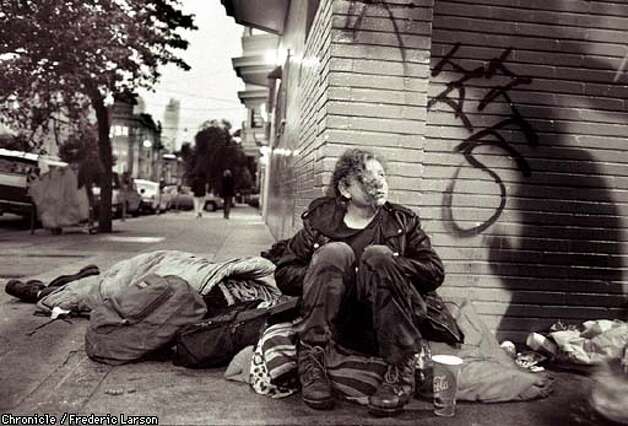
What's the first thing you think of when you see a homeless kid on the street? 
Where are their parents? Why aren't they in school? Am I about to get robbed?
What so you feel?
Pity? Sadness? Anger? Fear?

Well, guess what? If you thought or felt anything, you are in the minority. Most of us see or think or feel nothing when we walk past a homeless kid, because we don't even see them.

We have taught ourselves to simply keep on walking, riding or driving. We don't see homeless people. They are invisible.

Scholars, politicians and others invariably have strong opinions on the subject, but let me offer my humble opinion: It's risky to care.And because it's risky, because we scare ourselves out of reaching out, we cultivate a tunnel vision that allows go about our business, blind and deaf to the misery around us. And misery it is.
Help Covenant House help a homeless teenager

Every Year, More Than 2 Million Kids in America Will Face a Period of Homelessness

Behind the face of every homeless young person is another heartbreaking story – a teenage boy abused by his alcoholic parent, a pregnant girl rejected by her guardian, or a teenager trying to escape gang membership or a life of forced prostitution.
In case after case, the main cause of youth homelessness is physical, sexual, and/or emotional abuse from parents or guardians.
The facts about homelessness are staggering ... but acknowledging the depth of the problem is the first step in fixing it.
  • 57% of homeless kids spend at least one day every month without food.
  • In the United States, as many as 20,000 kids are forced into prostitution by human trafficking networks every year.
  • According to a study of youth in shelters, nearly 50% reported intense conflict or physical harm by a family member as a major contributing factor to their homelessness.
  • More than 25% of former foster children become homeless within two to four years of leaving the system.
  • 50% of adolescents aging out of foster care and juvenile justice systems will be homeless within six months because they are unprepared to live independently and have limited education and no social support.
  • Almost 40% of the homeless in the United States are under 18.
I will be acknowledging the problem by sleeping on the streets of New York City on March 21st. Please acknowledge the problem by joining me. If you can't do it in person, please do it by making a donation to Covenant House.They have been helping homeless kids since 1972.

Covenant House Sleepout NYC 3/21/2014

Thursday, February 27, 2014

Sleeping On The Street: Help Me Help Covenant House

A teenager on the street is the most vulnerable creature alive, fresh meat to every conceivable predator, addiction and abuse. Sometimes they believe they can't go back to their families; sometimes they literally cannot.
When I started working with teenagers in trouble, back in the 1970s, Covenant House was already there, doors open to kids in need.
Later this month some friends and I will be sleeping on the streets of NYC to draw attention to the problem of homelessness among teenagers, and to raise money for Covenant House to continue to do its good work.
The streets may be no country for old men, but they're no place for a kid, either.
Thanks to all of you who have contributed!
For those of you who haven't, well, I'm begging you. Whatever you can give. no contribution is too small. I'm begging so some kid on the street doesn't have to beg, or worse, to get a meal and a warm place to sleep.
Thanks
Ken

Young Professional Edition 2014 - New York: Ken Williams - Sleep Out: Young Professional Edition - Covenant House